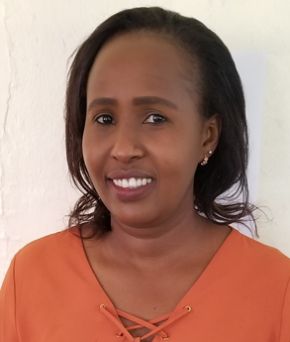
Maureen Cheserek
Director · Kerada JC Ltd
Eldoret
About
Maureen Cheserek works to advance millets for nutrition, livelihoods and sustainable food systems.
Millets track record
Her engagement with millets began in childhood. Her mother is a millet farmer, and she took part in family farming activities from an early age. At that time millet was largely considered a women's crop in her community, and she witnessed first-hand the considerable workload women carried, from planting and weeding to harvesting, threshing and processing. Her professional journey as a nutritionist deepened her understanding of the nutritional and health benefits of millets. Following her doctoral studies, she began working directly with millet farmers in 2015 as a Nutrition Specialist and Researcher under the Feed the Future Accelerated Value Chain Development Programme for drought-tolerant crops (2015 to 2021), which brought together ICRISAT, Egerton University, KALRO, county governments and local communities. Since then, millets have remained a consistent focus of her research and development work through projects including AFSTC, KCSAP, AVISA and a Mycotoxin Mitigation Project. Her work has included farmer training, participatory cooking activities, nutrition education, behaviour change communication, millet recipes and recipe books, and community resource materials. Her research is multidisciplinary and addresses the full millet value chain, from production, marketing, aggregation and storage to processing, value addition, packaging and consumption, working with breeders, agronomists, food scientists, nutritionists, social scientists and gender specialists, as well as farmers, processors, traders, schools, consumers and policymakers. A particular focus of her work is connecting what happens at farm level with what happens on the plate, and she is especially interested in gender-responsive approaches, value addition, food processing, reducing post-harvest losses, improving food safety, strengthening markets and reducing the labour burden faced by women.